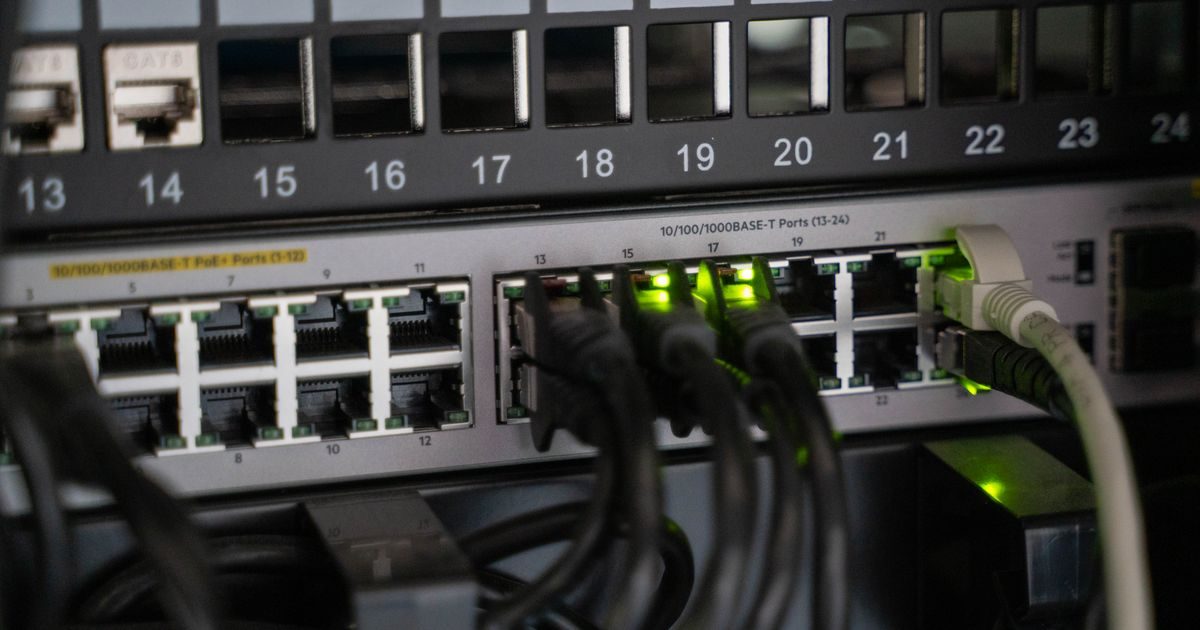
A dedicated server is the right infrastructure choice for any law firm in Querétaro that handles confidential case files, clients' personal data, and communications protected by attorney-client privilege. Unlike shared hosting or a VPS, a dedicated server places all hardware resources — CPU, RAM, storage — under your firm's exclusive control, with no other tenant sharing the same machine.
This guide covers the concrete scenarios where a dedicated server makes a real difference for a Querétaro law firm, the specifications you should demand, and the pitfalls to avoid.
Why Infrastructure Matters So Much for a Law Firm
A law firm processes particularly sensitive information: deeds, contracts, testimonies, tax documents, and privileged communications. In Mexico, the Federal Law on Protection of Personal Data Held by Private Parties (LFPDPPP) requires technical security measures proportional to the type of data processed. A firm handling commercial litigation files, associated notary offices, or criminal proceedings falls into the highest-risk category.
Shared hosting places your files on the same server as dozens or hundreds of other customers. If one of them is breached, the risk spreads. A VPS isolates the operating system but shares the physical hardware. A dedicated server eliminates both sources of risk at the root.
Real-World Cases Where a Dedicated Server Protects the Firm
Case 1: Document Management System (DMS)
Several firms in Querétaro use document management software such as Clio, MyCase, or custom PHP-based solutions. When that DMS lives on shared hosting, any neighbor failure — heavy traffic, a poorly optimized script, a security breach — degrades the attorneys' access to their case files.
On a dedicated server, the DMS is guaranteed its contracted resources around the clock. Access is audited in exclusive logs, and permission settings are managed by the firm's own administrator rather than a generic hosting provider.
Case 2: Email with End-to-End Encryption
Shared-hosting email typically routes through high-volume SMTP servers with variable reputation and greylisting policies. A firm can end up with client messages flagged as spam — or worse, with email credentials exposed through a compromised neighbor.
With a dedicated server, the firm controls its own mail server (Postfix + Dovecot, for example), implements DKIM, SPF, and DMARC correctly, and can enforce TLS on all inbound and outbound connections.
Case 3: Video Calls and Virtual Hearing Platforms
Since the pandemic, Querétaro courts have normalized remote hearings. A firm with its own video-conferencing portal — a self-hosted Jitsi Meet instance, for example — needs dedicated bandwidth and CPU to sustain simultaneous sessions without interruptions. Shared hosting throttles traffic; a dedicated server does not.
Case 4: Automated Backups and Legal Retention
Document retention obligations in Mexico range from 5 to 10 years depending on the practice area. A dedicated server lets the firm configure nightly incremental backups to external storage (SFTP or S3), with differentiated retention policies per file type — without depending on a hosting provider's generic backup plans.
Recommended Minimum Specs for a Querétaro Law Firm
| Parameter | Small firm (1–5 attorneys) | Mid-size firm (6–20 attorneys) |
|---|---|---|
| CPU | 4 cores / 3 GHz | 8 cores / 3 GHz |
| RAM | 16 GB ECC | 32 GB ECC |
| Storage | 500 GB NVMe SSD | 1 TB NVMe SSD (RAID 1) |
| Bandwidth | 1 Gbps / 5 TB/month | 1 Gbps / 10 TB/month |
| Operating system | Rocky Linux / Debian | Rocky Linux / Debian |
| External backup | Daily, 30-day retention | Daily + weekly, 90-day retention |
Prioritize ECC (Error-Correcting Code) RAM if your firm runs active case-file databases: it corrects in-memory bit errors before they can corrupt data.
Security Checklist Before Going Live
- Passwordless SSH: key-pair authentication only, non-standard port.
- Restrictive firewall: UFW or iptables with default-DROP policy; only necessary ports open.
- Encrypted disks: LUKS on volumes that store case files.
- Valid TLS certificates: Let's Encrypt or a commercial certificate on all web-facing services.
- Automated security updates:
unattended-upgradesor equivalent. - Access auditing:
auditdlogging reads and writes in the case-file directory. - 2FA for admin access: Google Authenticator TOTP on SSH and the admin panel.
If your firm does not have an in-house sysadmin, choose a provider of managed dedicated servers with specialized technical support that can handle these configurations on your behalf.
Local Querétaro Hosting vs. Datacenter in CDMX or Guadalajara
Querétaro hosts several Tier III datacenters in the Benito Juárez Industrial Park and surrounding areas, with direct connectivity to the city's IXP. If your firm serves clients across the Bajío region and needs minimal latency from city offices, a server in Querétaro or within 200 km reduces round-trip latency to 5–15 ms.
For most firms, however, a server in CDMX or Querétaro with solid national connectivity is sufficient. What matters most is the availability SLA (target at least 99.9 % monthly) and the response time for critical incidents.
Explore infrastructure options for law firms in our guide to VPS and dedicated servers for businesses in Mexico.
Key Takeaways
- A dedicated server eliminates the noisy-neighbor risk present in shared hosting and VPS: CPU, RAM, and storage are exclusive to your firm.
- The LFPDPPP demands proportional security measures; a well-configured dedicated server meets that requirement more easily than mass-market hosting.
- Critical use cases — DMS, encrypted email, video hearings, legal backups — all benefit directly from exclusive hardware.
- For small firms, 16 GB ECC RAM and 500 GB NVMe is a solid starting point; mid-size firms need double that.
- Server management can be outsourced to a managed provider if the firm lacks in-house technical staff.
If your Querétaro firm is evaluating the move to dedicated infrastructure, the elenlace.com team can advise you at no cost and quote the exact solution you need based on your case-file volume and concurrent users.
FAQ
Is a dedicated server legally required for a law firm?
There is no explicit legal obligation that mentions "dedicated server," but the LFPDPPP requires security measures proportional to risk. For firms handling sensitive data (health records, criminal proceedings, financial information), the required technical measures are higher — and a dedicated server with encryption is the most straightforward way to meet them.
How much does a dedicated server cost for a Querétaro law firm?
Entry-level dedicated servers for a small firm (4 cores, 16 GB RAM, 500 GB SSD) typically range from $2,000 to $4,500 MXN/month depending on the provider and whether management is included. A mid-size firm can expect to pay $5,000–$9,000 MXN/month for more robust hardware with managed support.
Can I use a cloud SaaS instead of a dedicated server?
Yes, with important caveats. Cloud legal SaaS platforms (Clio, MyCase) are valid choices for firms that prefer not to manage infrastructure. However, if you want full control of your data — with case files never leaving your servers — a dedicated server or managed private VPS is the alternative. The choice depends on your data sovereignty policy and the cost-benefit for your firm's size.
What happens if the server fails outside office hours?
That is exactly why you should contract a server with a 99.9 % monthly availability SLA and 24/7 support. Firms with higher operational criticality should also request a hardware replacement SLA: the provider commits to replacing faulty hardware in under 4 hours. Daily automated backups to external storage are the essential complement to any availability guarantee.
Compare providers
Other providers and guides worth comparing: