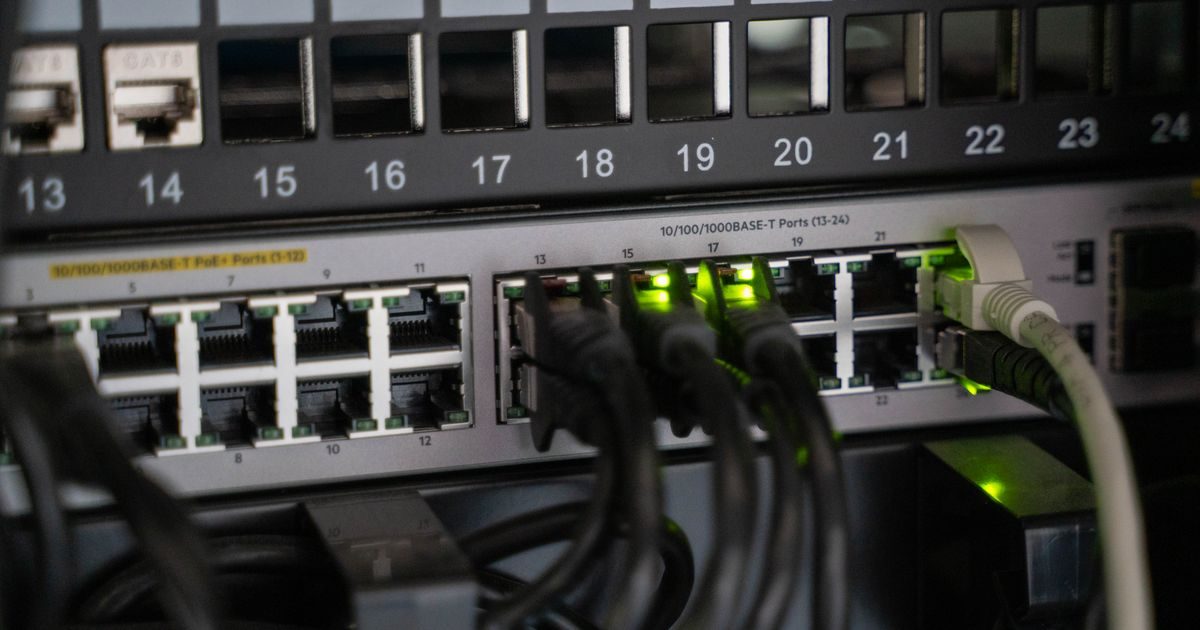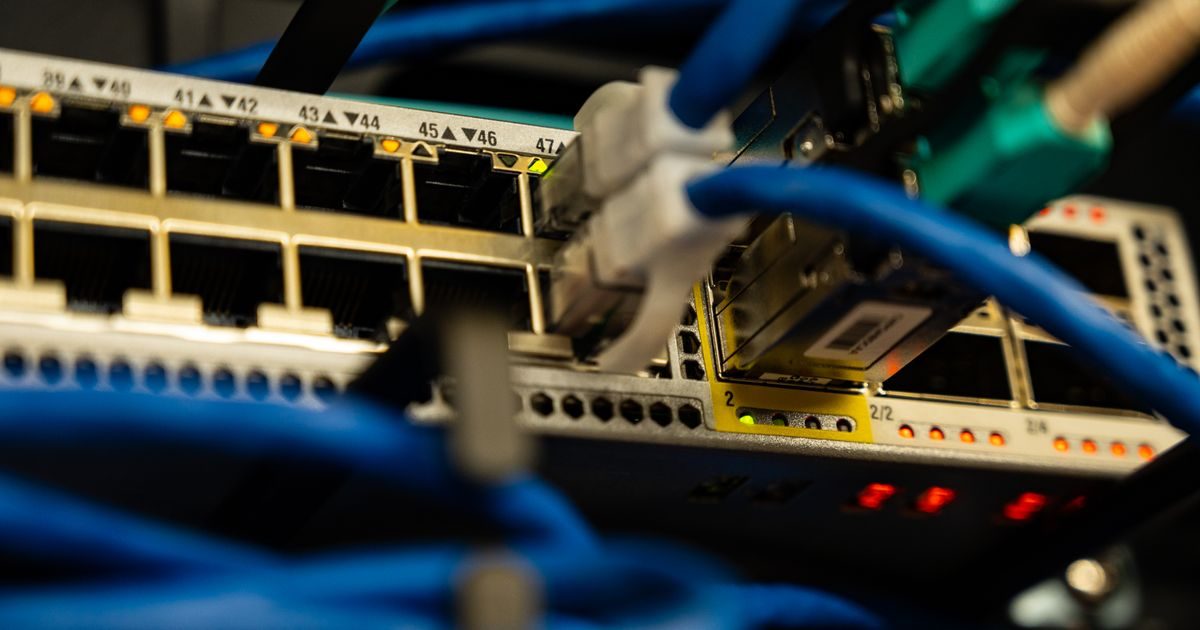
The fundamental difference between a physical server and a virtual server is straightforward: a physical server is a complete hardware machine assigned to a single customer; a virtual server is a logical slice of that hardware, isolated and shared with other users through software called a hypervisor.
What is a physical server?
A physical server — also called a dedicated server or bare-metal server — is a real computing machine installed in a data center. All of its hardware (CPU, RAM, disks, network cards) is reserved exclusively for one customer or purpose.
Key characteristics:
- Full access to all machine resources with no contention from other users.
- Maximum performance on CPU- or I/O-intensive workloads (large databases, rendering, HPC).
- The customer chooses and configures the operating system from scratch.
- Fixed monthly cost regardless of actual usage.
- Scaling requires acquiring or replacing physical hardware — a slower and more expensive process.
What is a virtual server?
A virtual server — commonly called a VPS (Virtual Private Server) or cloud instance — is a partition of a physical server created by a hypervisor (KVM, VMware, Hyper-V). Each partition has its own operating system, virtual CPU, allocated RAM, and storage, but shares the underlying hardware with other instances.
Key characteristics:
- Isolated resources: even though hardware is shared, other instances cannot access your memory or data.
- Lower cost than an equivalent physical server, because the hardware is divided among multiple customers.
- Fast scalability: increasing CPU or RAM does not require touching hardware — just reconfiguring the VM.
- The provider manages hardware; the customer manages only their OS and applications.
For a deeper look at how virtualization works behind these servers, visit our complete VPS and servers section.
Head-to-head comparison: physical vs. virtual
| Criterion | Physical server | Virtual server (VPS/cloud) |
|---|---|---|
| Raw performance | Maximum (no virtualization layer) | Very high, with slight hypervisor overhead |
| Resource isolation | Total (dedicated hardware) | Logical (enforced by hypervisor, not hardware) |
| Monthly cost | High (full hardware for one customer) | Low to medium (shared hardware) |
| Scalability | Slow (requires hardware change) | Fast (minutes from the control panel) |
| Availability on failure | Depends on internal redundancy | High (on cloud, migrates to another node automatically) |
| OS control | Total, including custom kernel | Total over guest OS; no access to host |
| Provisioning time | Hours or days (physical installation) | Minutes (pre-configured image) |
| Best for | Large databases, HPC, AAA gaming | Websites, business apps, staging, e-commerce |
When to choose each option
Choose a physical server if…
- Your workload requires direct hardware access (extreme disk I/O, dedicated GPU).
- You have regulatory requirements that demand full hardware isolation (high-level PCI-DSS, HIPAA).
- You run very large databases (terabytes of active data) with complex, concurrent queries.
- Your resource consumption is predictable and constant, making a fixed cost cheaper than pay-per-use.
Choose a virtual server if…
- You need to get started quickly on a controlled budget.
- Your traffic or load varies — fast scalability is key.
- You run multiple environments (production, staging, development) and don't want to pay for dedicated hardware for each.
- You want high availability without managing hardware redundancy yourself.
If you're still unsure which option fits your project best, the team at elenlace.com offers infrastructure consulting to help you make the right decision without overspending.
A closer look at cost
Price is often the deciding factor. A mid-range physical server (Intel Xeon, 32 GB RAM, 2 × 1 TB NVMe) can cost between $175 and $300 USD per month at most providers. A VPS with 8 vCPU and 16 GB RAM — capable of handling the majority of enterprise websites with ease — typically runs $30–60 USD per month.
The price gap reflects that with a VPS you pay only for your share of the hardware. The trade-off is that during peak load on the physical node, other tenants compete for the same physical resources — although modern hypervisors limit this through CPU and RAM guarantees.
Key takeaways
- A physical server delivers 100 % dedicated hardware; a virtual server shares hardware across isolated instances.
- Virtual servers are more affordable, faster to provision, and easier to scale.
- Physical servers win on raw performance, direct hardware access, and complete isolation for critical workloads.
- Most small and medium-sized businesses get better price/performance from a VPS or cloud server.
- Evaluate usage patterns, regulatory requirements, and budget before deciding.
Want to compare real prices and choose the right server for your business? Visit elenlace.com and speak with an infrastructure specialist.
FAQ
Is a VPS always slower than a physical server?
Not necessarily. For most web workloads and business applications, a modern VPS with NVMe SSD storage and guaranteed resources delivers latency and throughput that is indistinguishable from a physical server. Only in extreme workloads — HPC, multi-terabyte databases with high concurrency — does dedicated hardware make a noticeable difference.
Can a virtual server run out of resources if another tenant consumes too much?
With a properly configured VPS, no. Modern hypervisors (KVM, VMware) allocate RAM and CPU as guaranteed resources, not as freely shared pools. However, network bandwidth and disk I/O can suffer in low-quality virtualization environments. Always choose providers that document guaranteed resources, not just "up to X."
Can I migrate from a virtual server to a physical one without rebuilding everything?
Yes. Migration typically uses disk cloning tools or replication (rsync, VM images). The process is similar to moving between any pair of Linux servers: replicate data, adjust networking, and redirect traffic. A hosting provider can guide you through the steps.
Is a virtual server less secure than a physical one?
Not inherently. Hypervisor-layer attacks (VM escape) are extremely rare on mature hypervisors. Security depends far more on how the operating system and applications inside the server are configured — which applies equally to physical and virtual servers.
Compare providers
Other providers and guides worth comparing: