The types of dedicated servers are classified primarily by hardware architecture, the workload they are optimized for, and the management level offered by the provider. Understanding these categories is the first step toward not overpaying—or underpaying—when your business needs dedicated infrastructure.
This guide gives you a clear, practical classification: what sets each type apart, when it makes sense to choose it, and what questions to ask your provider before signing up.
What Makes a Server "Dedicated"?
A dedicated server is a physical machine assigned exclusively to a single customer. It shares no CPU, RAM, or storage with anyone else. That distinguishes it from shared hosting and, to a significant extent, from a VPS, where virtualization divides a single machine's resources among multiple users.
Exclusivity translates into predictable performance, full control over the operating system, and no "noisy neighbor" effect consuming resources meant for you.
Classification by Hardware Form Factor
Tower Server
Shaped like a vertical desktop PC. It is cost-effective and quiet but takes up floor or desk space. Tower servers are common in small offices or as local file servers.
Rack Server
Mounts in a standard 19-inch cabinet. Each unit occupies between 1U and 4U of rack height. Rack is the dominant format in data centers because it simplifies organization and cabling. If you rent a dedicated server from a hosting provider, it is almost certainly a rack server.
Blade Server
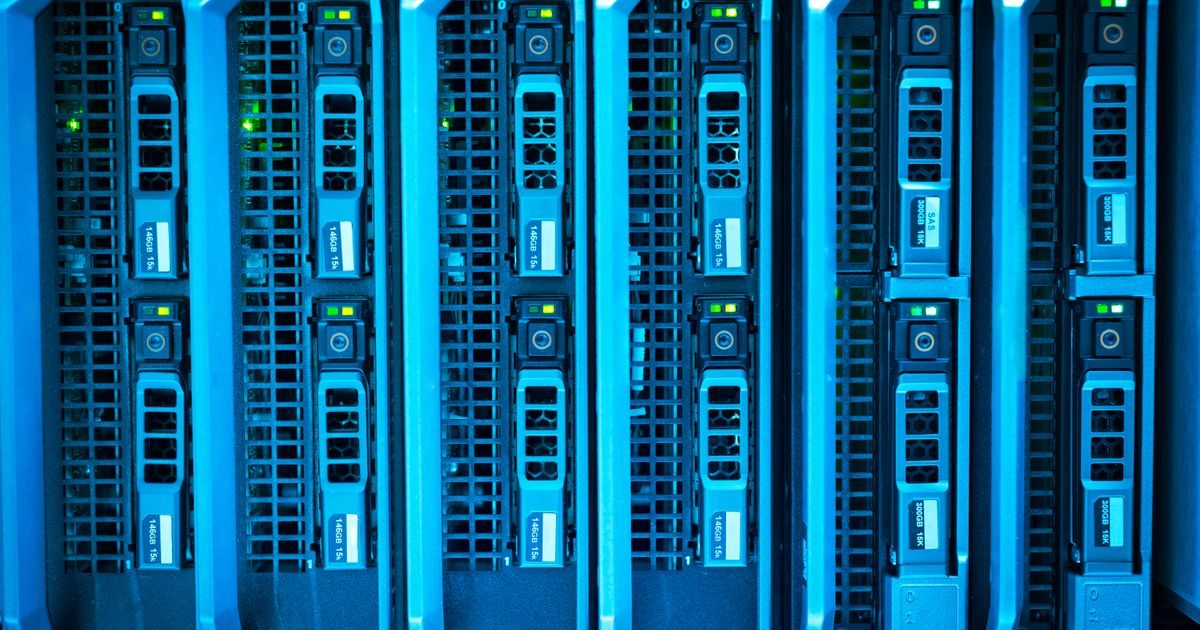
A shared chassis hosts multiple "blades," each with its own processor and RAM but sharing a power supply and networking. This maximizes compute density in limited space. Blades are common in large enterprises and private clouds.
Microserver / Mini Server
Compact, low-power nodes used in clusters for lightweight tasks or edge computing. Not the first choice for intensive workloads, but excellent for energy efficiency.
Classification by Workload
| Type | Optimized for | Typical hardware |
|---|---|---|
| Web / Application | High-traffic sites, e-commerce, SaaS | Multi-core CPU, NVMe SSD, 32–64 GB RAM |
| Database | MySQL, PostgreSQL, MongoDB at scale | High RAM (128+ GB), fast disks, optimized I/O |
| Storage / Backup | Files, backups, origin CDN | Multiple large HDD/SAS drives, RAID |
| High-Performance Compute (HPC) | Rendering, AI, scientific simulations | Many-core CPU or dedicated GPU, ECC RAM |
| Corporate mail servers, mailing lists | Moderate CPU, clean IP, SATA storage | |
| Gaming | Online game servers, low latency | High-frequency CPU (GHz), 1–10 Gbps network |
Classification by Management Level
Unmanaged Dedicated Server
The provider delivers powered-on hardware with a base operating system. Everything else—updates, security, software, backups—falls on the customer. This is the cheapest option and the one that grants the most control. Ideal for technical teams experienced with Linux or Windows Server administration.
Managed Dedicated Server
The provider handles OS management, security patches, monitoring, and technical support. The customer focuses on the application layer. Monthly cost is higher, but the savings in sysadmin hours can justify it for companies without an in-house infrastructure team.
Semi-Managed Dedicated Server
A middle ground: the provider manages the base system (OS, kernel, network firewall) while the customer administers application software. Common in plans that include a control panel (cPanel, Plesk).
Bare Metal vs. Classic Dedicated Server
The term bare metal is increasingly used for dedicated servers with fast provisioning (sometimes minutes) offered by public clouds like AWS and Azure, or by specialized providers. The practical difference from a classic dedicated server is mainly commercial:
- Classic dedicated: monthly contract, fixed hardware, specific data center.
- Cloud bare metal: hourly billing, standardized hardware selected from a catalog, integration with other cloud services.
Performance is equivalent in both cases: a single tenant, no interposed hypervisor. Explore more server options in our servers and VPS section.
Which Type Is Right for Your Project?
One simple question guides the decision: what is your application's bottleneck?
- CPU-bound: rendering, compilation, AI → HPC or high-compute server.
- Memory-bound: large in-memory databases → DB server with 64–256 GB RAM.
- Disk I/O: e-commerce with heavy write activity → NVMe, preferably RAID 10.
- Network-bound: streaming, gaming → 10 Gbps ports, low latency to end users.
- Raw capacity: backups, media files → 8–16 TB HDD in RAID 6.
If your team lacks experience managing Linux servers, consider a managed plan or partner with a technical agency. At elenlace.com we help Mexican businesses select and manage the right infrastructure for their stage of growth.
Key Takeaways
- Dedicated servers are classified by hardware form factor (tower, rack, blade), workload (web, database, storage, HPC, email, gaming), and management level (unmanaged, semi-managed, managed).
- Rack format is the data center standard; blade maximizes density; tower suits small office environments.
- Bare metal is essentially a fast-provisioning dedicated server under a cloud model; performance is equivalent.
- Identify your application's bottleneck (CPU, RAM, I/O, network) before choosing a server type.
- A managed server costs more but reduces operational burden if you have no in-house sysadmin.
Ready to choose your dedicated server? Talk to the specialists at elenlace.com and get a personalized recommendation with no commitment.
FAQ
What is the difference between a dedicated server and a VPS?
A dedicated server is physical hardware exclusively assigned to one customer. A VPS (virtual private server) shares a physical machine through virtualization; multiple VPS instances coexist on the same real hardware. Dedicated servers offer higher performance and isolation, but at a higher cost.
When does a blade server make more sense than a rack server?
Blades are advantageous when you need high compute density in limited space and can spread the chassis cost across multiple modules. For most businesses, a standard rack server is sufficient and more cost-effective.
Is a managed dedicated server safe for sensitive data?
Yes, provided the provider holds recognized certifications (ISO 27001, PCI-DSS as applicable) and clear confidentiality agreements are in place. A managed model does not mean the provider accesses your application data; they manage the operating system and base infrastructure.
What does "bare metal" mean?
Bare metal means the server runs the operating system directly on hardware, with no hypervisor in between. This eliminates the performance overhead of virtualization. The term was popularized by cloud providers to distinguish their physical instances from virtual ones.
Useful resources
Other providers and guides worth comparing: