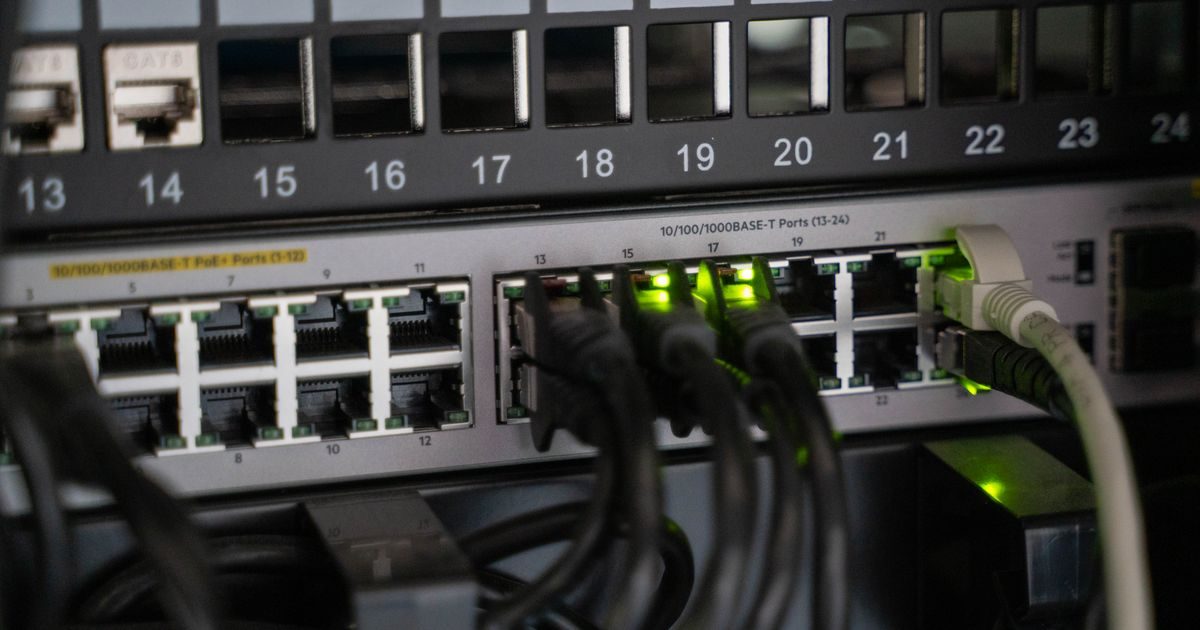
Server virtualization is the technology that splits a single physical server into multiple independent virtual servers, each with its own operating system, CPU, RAM, and storage resources. It is the principle behind VPS hosting, public cloud platforms, and much of the modern internet's infrastructure.
What Problem Does Virtualization Solve?
Historically, each application required its own dedicated physical server. The result was expensive and inefficient: machines often ran at 5–15% of their actual capacity while IT teams managed dozens of physical boxes.
Virtualization changes that equation entirely. A powerful physical server is divided into multiple virtual machines (VMs) that share the underlying hardware but behave as completely separate computers. Each VM:
- Has its own operating system (Linux, Windows, etc.).
- Cannot see or access data belonging to other VMs.
- Can be shut down, rebooted, moved, or cloned without affecting the others.
- Receives a guaranteed slice of CPU, RAM, and disk.
The Hypervisor: The Engine of Virtualization
The central piece of any virtualization system is the hypervisor (also called a VMM, or Virtual Machine Monitor). It is the software layer that sits between the physical hardware and the virtual machines, managing access to resources.
There are two main types:
Type 1 Hypervisor (Bare-Metal)
Runs directly on the hardware with no host operating system. This is the standard for production environments due to its superior performance and security. Examples: KVM (Linux), VMware ESXi, Microsoft Hyper-V.
Type 2 Hypervisor (Hosted)
Runs as an application on top of a conventional operating system. Easier to install but introduces additional latency. Mainly used for local development and testing. Examples: VirtualBox, VMware Workstation.
| Feature | Type 1 (bare-metal) | Type 2 (hosted) |
|---|---|---|
| Performance | High (direct hardware access) | Moderate (extra OS layer) |
| Typical use | Production, VPS/cloud providers | Local development, testing |
| Examples | KVM, ESXi, Hyper-V | VirtualBox, VMware Workstation |
| Security | Stronger isolation | Depends on the host OS |
The Main Types of Virtualization
Not all virtualization works the same way. There are several approaches, each with distinct trade-offs:
Full Virtualization
The hypervisor fully emulates the hardware. Each VM can run any unmodified OS. This is the standard model with KVM and VMware, offering the strongest isolation between guests.
Paravirtualization
The guest OS is modified to communicate directly with the hypervisor, bypassing the emulation layer. This improves performance but requires a compatible guest OS. Xen uses this model.
Container-Based Virtualization (OS-Level)
There is no hypervisor: the host OS kernel creates isolated spaces called containers. They are lighter and faster than full VMs but share the same kernel. Technologies: Docker, LXC, OpenVZ.
This distinction matters when buying VPS hosting: an OpenVZ-based VPS is technically a container; a KVM-based VPS is a true virtual machine with its own kernel and stronger isolation.
To see how this affects performance and pricing, check the comparison guides in our VPS servers section.
Benefits of Server Virtualization
The technology's widespread adoption is no accident. Its benefits are concrete and well-documented:
- Efficient hardware use: a single physical server can host dozens of VMs, boosting utilization from 10% to 70–80%.
- Cost reduction: fewer physical servers mean lower electricity, cooling, and rack-space costs.
- Isolation and security: if one VM is compromised, the others remain untouched.
- High availability: a VM can be live-migrated to another physical host with zero downtime.
- Fast scaling: adding RAM or CPU to a VM takes seconds, not weeks of procurement.
- Rapid test environments: cloning a VM for a staging setup takes minutes.
Virtualization in Practice: VPS, Cloud, and Beyond
The most direct impact for businesses and developers is the virtual private server (VPS). A hosting provider buys high-end physical servers, virtualizes them with KVM or another type-1 hypervisor, and rents you a slice of those resources at a fraction of the cost of a dedicated server.
You get full root access, your own operating system, and guaranteed resources—without worrying about the physical hardware.
The next tier is the public cloud (AWS, Google Cloud, Azure): the same virtualization technology, layered with automation, per-minute billing, and hundreds of managed services on top.
For most websites, online stores, and SMB applications, a well-configured VPS offers the ideal balance between control, performance, and cost. At elenlace.com we help you choose the right VPS and set it up from scratch.
When Does Each Option Make Sense?
| Use case | Recommended option |
|---|---|
| Website or blog with moderate traffic | Basic VPS (KVM, 1–2 GB RAM) |
| Online store or growing app | Scalable VPS or cloud VPS |
| Testing environment or CI/CD | Docker containers or cloned VM |
| Business-critical workloads, full hardware control | Dedicated server |
| Unpredictable traffic spikes | Public cloud (AWS, GCP, Azure) |
If you are considering moving from shared hosting to a VPS, the consultants at elenlace.com can audit your current resource usage and recommend the right plan—no commitment required.
Key Takeaways
- Server virtualization divides a physical server into multiple independent virtual machines via a hypervisor.
- Type 1 hypervisors (bare-metal) are used in production; Type 2 (hosted) are for local development.
- KVM provides full virtualization with kernel isolation; OpenVZ uses containers with a shared kernel.
- Key benefits: resource efficiency, cost reduction, isolation, high availability, and rapid scaling.
- A VPS is the most accessible way to leverage virtualization: full root control at a fraction of a dedicated server's cost.
- Public cloud scales the same technology with automation and granular billing, ideal for variable workloads.
Understanding server virtualization helps you make smarter infrastructure decisions and scale your project with confidence. For personalized guidance on choosing the right server for your situation, visit elenlace.com and talk to our team.
FAQ
Are a VPS and a virtual machine the same thing?
Technically, a KVM-based VPS is a virtual machine. However, in the hosting market, "VPS" implies the full service package—networking, storage, and provider support. They are related concepts but not identical in a commercial context.
Does virtualization hurt performance compared to bare metal?
Minimally with modern type-1 hypervisors. The overhead is typically under 5% for most workloads. Type-2 hypervisors do introduce more latency and are not recommended for production.
What is the difference between a VPS and cloud hosting?
A traditional VPS lives on a single physical host server. Cloud hosting distributes the VM across multiple physical nodes, allowing instant resource scaling and higher redundancy. Cloud is usually more expensive per hour but far more flexible for traffic spikes.
Can I install any operating system on a virtual machine?
With full virtualization (KVM, VMware), yes—Linux, Windows, FreeBSD, and other compatible OSes all work. With containers (OpenVZ, Docker), no: all guests share the host's kernel, so only Linux distributions compatible with that kernel can run.
Compare providers
Other providers and guides worth comparing: