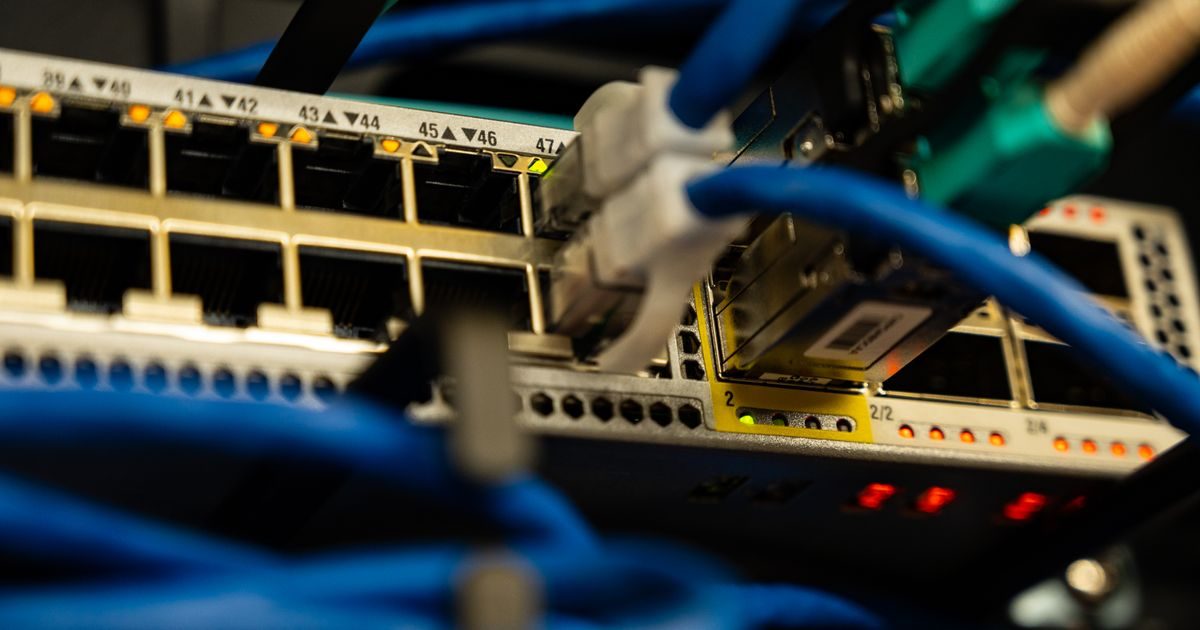
A hypervisor is software — or firmware — that creates and manages virtual machines (VMs) on a single physical server. It is the core component that makes VPS hosting possible: without a hypervisor, there is no virtualization.
Why Understanding the Hypervisor Matters
When you purchase a VPS, you don't receive a dedicated physical server. You receive an isolated slice of one. The hypervisor acts as the arbiter: it distributes CPU, RAM, storage, and network bandwidth across all VMs sharing the same hardware, ensuring each one operates as if it were an independent machine.
Understanding this helps you choose the right type of VPS, compare providers intelligently, and troubleshoot performance issues.
Types of Hypervisor: Type 1 vs Type 2
The industry's most important distinction divides hypervisors into two categories:
Type 1 Hypervisor (bare-metal)
Runs directly on the hardware, with no host operating system in between. This is the standard for production servers and professional VPS hosting.
- KVM (Kernel-based Virtual Machine) — built into the Linux kernel; the most common choice in quality VPS hosting.
- VMware ESXi — dominant in enterprise environments.
- Microsoft Hyper-V — native option in Windows Server.
- Xen — historically used by Amazon AWS and many cloud providers.
Type 2 Hypervisor (hosted)
Runs on top of a conventional operating system (macOS, Windows, desktop Linux). Designed for development and testing, not production.
- VirtualBox
- VMware Workstation / Fusion
- Parallels Desktop
| Feature | Type 1 (bare-metal) | Type 2 (hosted) |
|---|---|---|
| Performance | High (direct hardware access) | Moderate (extra OS layer) |
| Typical use | VPS servers, public cloud | Local development, testing |
| Examples | KVM, ESXi, Hyper-V, Xen | VirtualBox, VMware Workstation |
| Cost | Included in infrastructure | Free or desktop license |
How a Hypervisor Works, Step by Step
The process is simpler than it sounds:
- Hypervisor boot. When the server powers on, a Type 1 hypervisor takes control of the hardware before any operating system loads.
- VM creation. The administrator defines how many CPU cores, how much RAM, and how much disk space each virtual machine will receive.
- Guest OS installation. Inside the VM, Linux, Windows, or another OS is installed exactly as it would be on physical hardware.
- Isolation. The hypervisor ensures one VM cannot read or affect another VM's memory. If one VM crashes, the others keep running.
- Resource adjustment. Modern hypervisors like KVM allow CPU and RAM to be adjusted live, without rebooting the VM.
KVM: The Most Common Hypervisor in Quality VPS Hosting
If your provider offers KVM-based VPS, you're getting full virtualization. Each VM has its own kernel, can use custom modules, and isolation is complete.
This is different from older technologies like OpenVZ, which shares the host's kernel across all containers. OpenVZ is cheaper to operate, but imposes restrictions KVM does not — for example, you can't modify kernel parameters or run Docker easily.
If your project needs full configuration freedom, insist on KVM. For a broader comparison of VPS types, browse our VPS server guides.
Hypervisors vs Containers: Are They the Same?
No — this is a common misconception.
- Hypervisor / VM: virtualizes the full hardware stack. Each VM has its own kernel. Stronger isolation.
- Containers (Docker, LXC): share the host kernel. Lighter and faster to start, but with less isolation.
In practice, both technologies complement each other: you can run Docker inside a VM that sits on top of KVM.
Key Takeaways
- A hypervisor splits one physical server into multiple isolated virtual machines.
- Type 1 hypervisors (KVM, ESXi, Xen) are what power professional VPS hosting.
- KVM is the dominant choice in quality VPS for its full isolation and flexibility.
- Containers (Docker) are not the same as VMs: they share the host kernel and offer less isolation.
- Choosing a KVM-based VPS gives you full control over the operating system and runtime environment.
Ready to put KVM-powered VPS to work for your project? The team at elenlace.com offers free guidance to match you with the right plan for your workload and budget.
FAQ
Do I need to know which hypervisor my provider uses?
Yes, if your application has specific kernel requirements — Docker, VPNs, custom kernel modules — you need KVM or another full-virtualization hypervisor. OpenVZ may impose significant restrictions.
Is KVM more expensive than OpenVZ?
Slightly, because it consumes more resources per VM. However, the price difference in the market is rarely significant, and the gain in flexibility justifies it for most use cases.
Does the hypervisor affect my website's performance?
A well-configured Type 1 hypervisor introduces minimal overhead (less than 2–5%). Performance depends far more on the resources allocated to your VM (CPU, RAM, disk type) than on the hypervisor itself.
Can I install any operating system on a KVM VPS?
Practically yes. KVM supports any OS that runs on x86-64 architecture: Ubuntu, CentOS, Debian, AlmaLinux, Windows Server, FreeBSD, and many others.
Prefer it done for you? El Enlace handles hosting and professional web development.
Useful resources
Other providers and guides worth comparing: