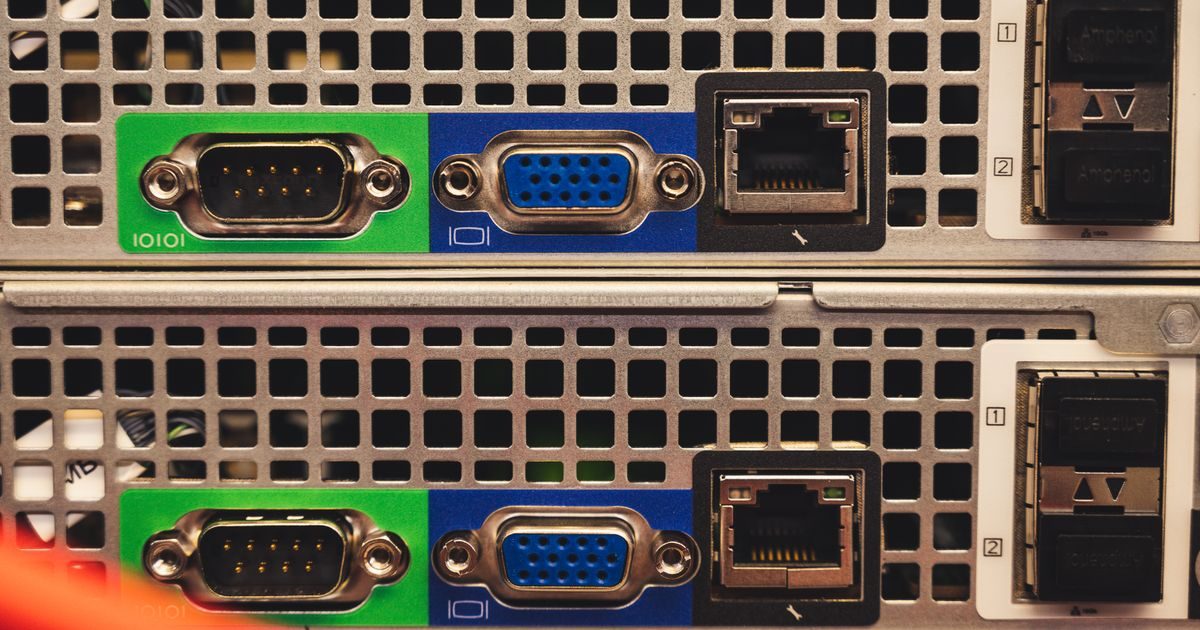
A VPS with a Mexico datacenter delivers 5–20 ms latency for Mexican users, compared to the 40–100 ms typical of a server in Dallas or Miami. For most businesses targeting a local audience, that gap translates to faster sites, better Google rankings, and fewer bounce-rate losses.
Why Datacenter Location Matters
Latency is the time it takes a data packet to travel from the user's browser to the server and back. Milliseconds may sound trivial, but Google has confirmed that load speed is a ranking factor, and UX research shows that each additional 100 ms of delay can reduce conversions by up to 1%.
For a user in Mexico City connecting to servers in different locations, typical response times look like this:
| Datacenter location | Approximate latency from CDMX |
|---|---|
| Mexico City / Querétaro | 5 – 20 ms |
| Dallas / San Antonio, TX | 35 – 55 ms |
| Miami, FL | 60 – 90 ms |
| New York / Virginia | 80 – 120 ms |
| Los Angeles, CA | 45 – 75 ms |
These are reference values; network congestion and actual peering routes can shift them. The key takeaway is that the gap between a Mexico datacenter and a US one rarely drops below 30 ms for Mexican users.
Advantages of a Mexico Datacenter
- Lower latency for local audiences: the most direct benefit and the primary reason to choose a Mexican datacenter when your customers are in the country.
- Stronger local SEO: Google uses server geolocation as a signal for local search rankings, alongside domain and content signals. A Mexico-based server reinforces regional relevance.
- Regulatory compliance: some sectors (healthcare, finance, government) have data residency requirements. A Mexico datacenter eliminates that friction without additional contractual clauses.
- Support in Mexican business hours: local providers typically offer Spanish-language support aligned with Mexico's central time zone.
Advantages of a US Datacenter (Texas or California)
- Larger market and more competitive pricing: the US VPS market is more mature. Providers like DigitalOcean, Linode/Akamai, or Vultr offer plans at very competitive prices with proven redundant infrastructure.
- Better international connectivity: if your audience is spread across Mexico, the US, and Latin America, a Texas datacenter can balance latency better than one exclusively in CDMX.
- Richer ecosystem of auxiliary services: managed databases, object storage, integrated CDN, and other add-ons are more developed with large US-based providers.
Price Comparison: Mexico vs US
VPS plans with a Mexico datacenter typically cost 10–30% more than equivalent US plans, mainly because local infrastructure operates at a smaller scale. However, the gap narrows when you factor in support quality and incident resolution times.
| Reference plan | Mexico datacenter (MXN/mo) | US datacenter (MXN/mo equiv.) |
|---|---|---|
| 2 vCPU, 4 GB RAM, 80 GB SSD | $650 – $900 | $500 – $750 |
| 4 vCPU, 8 GB RAM, 160 GB SSD | $1,300 – $1,800 | $950 – $1,400 |
USD prices are converted at the approximate mid-2026 exchange rate. Always verify current pricing with the provider.
The premium for a Mexico datacenter pays off quickly if 80% or more of your traffic comes from Mexico: the speed improvement reduces churn, improves conversions, and supports local SEO — benefits that are hard to quantify precisely but are very real.
When to Choose Each Option
Choose a Mexico datacenter when:
- Your audience is predominantly Mexican (over 70% of traffic).
- You sell or provide services in MXN and want to reinforce local SEO signals.
- You handle sensitive data from Mexican users and prefer local data residency.
- You need technical support in Spanish during Mexico business hours.
Choose a US datacenter (Texas) when:
- Your audience is split between Mexico and the US, and Texas balances latency well for both.
- You need auxiliary services (managed databases, object storage) not available from local providers.
- Budget is very tight and a 30–50 ms difference isn't critical for your use case (e.g., a blog or content site with no transactions).
If you're unsure which is best for your project, the specialists at elenlace.com can help you evaluate the right architecture without pushing a specific solution. Also check out our full resource library in the VPS servers category for more comparisons.
Key Takeaways
- A Mexico datacenter delivers 30–80 ms less latency for Mexican users compared to a US server.
- VPS in Mexico typically costs 10–30% more, but that premium is justified when your audience is mainly local.
- For mixed Mexico / US audiences, a Texas datacenter (Dallas or San Antonio) is a solid middle ground.
- Local providers offer additional perks: Spanish support in Mexican time zones and smoother alignment with local regulatory requirements.
- For static content (images, CSS, JS), use a CDN regardless of datacenter choice — that traffic benefits from edge proximity more than server location.
Need personalized guidance? The team at elenlace.com analyzes your project and recommends the optimal datacenter and plan for your budget and audience.
FAQ
Does the datacenter location affect Google Mexico rankings?
Yes, but moderately. Server location is a geotargeting signal that Google uses alongside domain (ccTLD .mx), content, and hreflang tags. A server in Mexico reinforces local signals, but it doesn't replace quality content and a solid SEO strategy.
Can I use a CDN to compensate for a US server's latency?
Yes, for static content (images, CSS, JS, video) a CDN with nodes in Mexico — like Cloudflare, which has a presence in CDMX — can significantly reduce perceived latency. However, dynamic requests (PHP, APIs, database queries) always go back to the origin server, so a CDN doesn't fully close the latency gap for those requests.
Which VPS providers have datacenters in Mexico?
Providers with confirmed presence in Mexico or Querétaro include KIO Networks, MCM Telecom, Ixcotel, and several national hosting companies. Major international players (AWS, Google Cloud, Azure) have Mexican regions but at enterprise cloud pricing, not affordable VPS rates.
Is data residency in Mexico legally required for my business?
It depends on your industry and the type of data you process. Mexico's Federal Law on Protection of Personal Data Held by Private Parties (LFPDPPP) does not prohibit cross-border data transfers, but it requires informing the data subject and maintaining equivalent security measures. For regulated sectors (healthcare, finance), consult a legal specialist before deciding on server location.
Compare providers
Other providers and guides worth comparing: