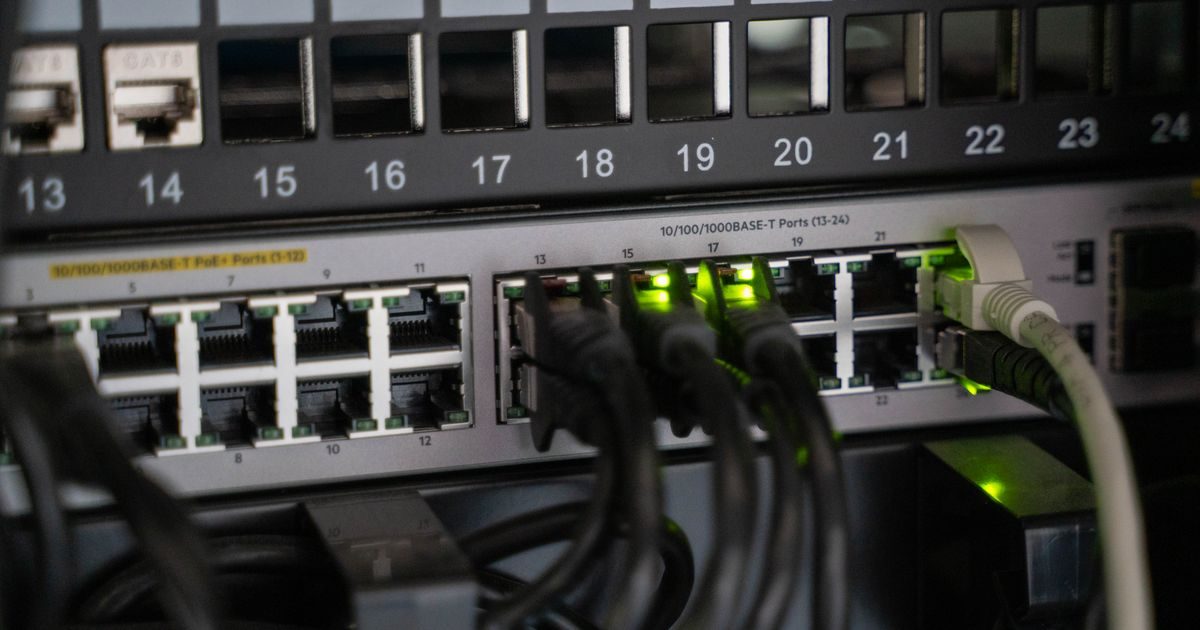
Server bandwidth is the maximum amount of data a server can send or receive per unit of time — typically measured in megabits per second (Mbps) or gigabits per second (Gbps). In plain terms: it's the "lane" through which data travels between the server and your website visitors.
A narrow lane means visitors wait. A wide lane means a smooth experience. Understanding bandwidth lets you choose the right hosting plan and avoid unexpected overage charges.
Bandwidth vs. monthly transfer: two different concepts
These terms are often used interchangeably, but they're not the same thing.
- Bandwidth: the maximum speed of the connection, expressed in Mbps or Gbps. It's the instantaneous ceiling — how fast data can arrive or leave at any given moment.
- Monthly transfer (also called traffic or data transferred): the total volume of data that flows in a month, expressed in GB or TB.
Think of it this way: bandwidth is the diameter of a pipe, while monthly transfer is the total amount of water that passes through it in a month.
Some hosting providers cap monthly transfer (e.g., 1 TB/month). Others offer unlimited transfer but with a shared or fixed-speed port (e.g., 100 Mbps). Both approaches affect performance differently.
How server bandwidth is measured
The standard unit is bits per second and its multiples:
| Unit | Equivalent | Typical context |
|---|---|---|
| 1 Mbps | 1,000,000 bits/s | Basic shared hosting |
| 100 Mbps | 100 million bits/s | Standard VPS |
| 1 Gbps | 1,000 Mbps | Premium VPS / dedicated server |
| 10 Gbps | 10,000 Mbps | High-availability servers |
Important note: providers advertise speeds in bits, but files are sized in bytes. A 100 Mbps port can theoretically transfer ~12.5 MB per second (100 ÷ 8 = 12.5).
What consumes your server's bandwidth
Every exchange of data between the server and the outside world counts. The main consumers are:
- HTML pages and static assets: every page visit downloads HTML, CSS, JavaScript, and images.
- File downloads: PDFs, videos, software packages — anything a user downloads.
- Remote backups: if the server backs up data to another server, that traffic adds up.
- APIs and webhooks: inbound and outbound calls from your application.
- Email: if the server also handles email, each message consumes transfer.
- Bots and crawlers: Googlebot, SEO auditors, and malicious bots generate real traffic that counts toward your usage.
How much bandwidth does your website need?
A simple estimate: average page size × monthly page views × an overhead factor.
Example for a blog with 20,000 visits/month:
- Average page size: 1.5 MB
- Pages per visit: 2
- Total: 20,000 × 2 × 1.5 MB = 60 GB/month
- Safety factor ×1.5 = ~90 GB/month
For sites with traffic spikes (product launches, email campaigns, viral content), instantaneous bandwidth matters more than the monthly quota. A VPS with a 1 Gbps port handles spikes far better than one with 100 Mbps, even if both have the same monthly transfer allowance.
For more detail on sizing your infrastructure, browse our VPS and server hosting guides.
Bandwidth in shared hosting vs. VPS vs. dedicated
Your hosting type directly determines how much bandwidth you have — and whether you're sharing it.
- Shared hosting: hundreds of sites share the same network port. During peak hours, effective speed can degrade significantly without the provider documenting it.
- VPS: the network port is guaranteed or has a defined minimum. While the hypervisor shares the physical network, bandwidth is virtualized with limits set per plan.
- Dedicated server: the network port is yours exclusively. No one else can consume it. Ideal for high-volume e-commerce or apps with consistently high, predictable traffic.
The infrastructure specialists at elenlace.com can help you match your traffic patterns to the right server tier without overpaying.
Key takeaways
- Bandwidth is the maximum transfer speed; monthly transfer is the total volume — they are two different metrics.
- Everything the server sends or receives (pages, files, backups, APIs) consumes bandwidth.
- To estimate your needs: page size × page views × safety factor.
- In shared hosting, bandwidth is shared; VPS and dedicated plans offer clearer guarantees.
- Traffic spikes demand a generous port speed, not just a high monthly quota.
Ready to pick a plan with the bandwidth your site actually needs? Reach out to the elenlace.com team for a no-commitment recommendation tailored to your traffic.
FAQ
What happens if I exceed my bandwidth or monthly transfer limit?
It depends on the provider. Some charge for the overage per extra GB; others throttle the port speed until the next billing cycle; and some temporarily suspend the site. Always review the overage policy before signing up.
Does bandwidth affect my site's SEO?
Indirectly, yes. Insufficient bandwidth leads to slow response times, which hurts Core Web Vitals (especially LCP and TTFB). Google uses page speed as a ranking signal, so a slow server can cost you positions in search results.
What does "unlimited transfer" on a hosting plan actually mean?
It means the provider doesn't set a numeric GB/month cap, but the port speed is still finite. Most contracts also include a "fair use" clause that allows the provider to throttle accounts consuming disproportionate resources.
Can I reduce bandwidth consumption without changing plans?
Yes. The most effective measures are: enabling a CDN (the delivery network serves static assets closer to users), optimizing image and video file sizes, enabling aggressive HTTP caching, and blocking malicious bots that generate valueless traffic.
Compare providers
Other providers and guides worth comparing: