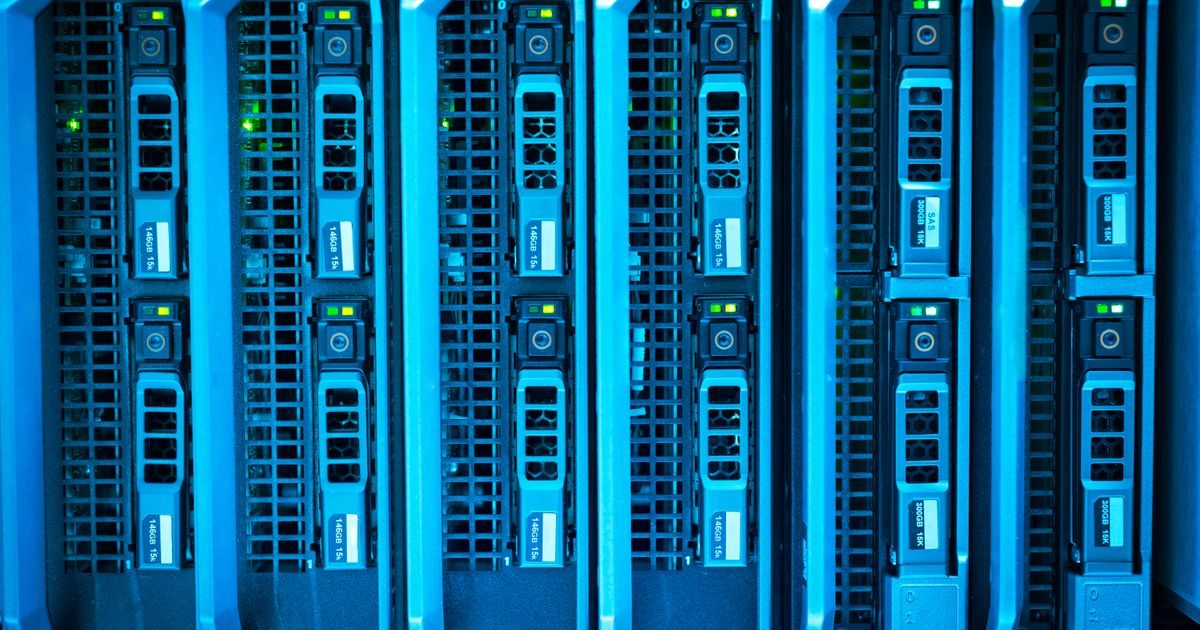
A database server is a system—software and, optionally, dedicated hardware—that manages the storage, organization, and access to structured data. In plain terms: it is the "smart warehouse" that stores your application's information and delivers it on demand.
This guide explains how it works, how it differs from a web server, and when it makes sense to run both on separate machines.
What Does a Database Server Actually Do?
A database server runs a database management system (DBMS)—such as MySQL, MariaDB, PostgreSQL, SQL Server, or MongoDB—and handles:
- Receiving queries from clients (applications, scripts, admin panels).
- Reading or writing data to disk in an organized, safe manner.
- Managing concurrency: multiple clients can query or modify data simultaneously without corruption.
- Enforcing integrity rules: data types, foreign keys, uniqueness constraints.
- Controlling access through users, passwords, and granular permissions.
- Optimizing query execution via indexes and execution plans.
All of this happens transparently to the end user. When someone clicks "View my order" on an online store, the web application sends a SQL query to the database server, which responds with the order data in milliseconds.
Database Server vs. Web Server: Key Differences
Although both are "servers" in the sense that they handle requests and return responses, they serve very different roles.
| Characteristic | Web Server | Database Server |
|---|---|---|
| Main function | Deliver HTML pages, files, HTTP/HTTPS responses | Store and query structured data |
| Typical software | Apache, Nginx, Caddy | MySQL, MariaDB, PostgreSQL, MongoDB |
| Protocol | HTTP / HTTPS (ports 80, 443) | DBMS-specific protocol (MySQL: 3306, PostgreSQL: 5432) |
| Direct clients | Browsers, mobile apps, bots | Backend apps, scripts, the web server itself |
| Critical resource | Bandwidth, concurrent connections | RAM (data cache), disk I/O, CPU for complex queries |
| Public exposure | Yes, accessible from the Internet | No (security rule: internal network access only) |
The most important security difference: a database server should never be directly accessible from the Internet. Only the application layer (the web server or backend server) should be able to connect to it, preferably over a private network or loopback interface.
How They Fit Into a Typical Web Architecture
In the simplest model—a single VPS or shared server—the web server and database server run on the same machine. Apache or Nginx serve the PHP or Python application; MySQL listens on 127.0.0.1:3306. This setup is cheap and sufficient for small to medium sites.
As traffic grows, a two-tier architecture becomes appropriate:
- Web tier: one or more web/application servers, publicly accessible.
- Data tier: database server on a private network, not publicly exposed.
Separating the tiers provides two key benefits: each layer can be scaled independently, and security improves because the database is unreachable from outside. Learn more about server architectures in our servers and VPS section.
Types of Database Servers
Relational (SQL)
Data is organized in tables with rows and columns. Relationships between tables are defined using foreign keys. SQL is used as the query language. Examples: MySQL, MariaDB, PostgreSQL, Microsoft SQL Server, Oracle Database.
These are the dominant choice for web applications: e-commerce, CMS platforms, ERPs, CRMs.
Non-relational (NoSQL)
Data is stored in alternative formats: JSON documents (MongoDB), key-value pairs (Redis), graphs (Neo4j), or wide columns (Cassandra). They excel at horizontal scalability and flexible schemas.
Redis, though technically an in-memory store, often acts as a cache layer on top of the main database server, speeding up the most frequent queries.
NewSQL
These combine the transactional consistency of the relational model with the horizontal scalability of NoSQL. Examples: CockroachDB, TiDB. Less common, but relevant for globally distributed, high-demand applications.
When Do I Need a Dedicated Database Server?
These signals indicate it is time to move the database to its own server:
- The combined server consistently reaches 70–80% RAM or CPU utilization.
- Slow queries appear in logs even after index optimization.
- You need primary-replica replication for reads and failover.
- Your application requires regulatory compliance (PCI-DSS, HIPAA) that mandates data isolation.
- You want to take database backups without impacting web server performance.
At elenlace.com we work with your team to evaluate the most suitable architecture based on your data volume and budget, so your infrastructure keeps pace with your growth.
Key Takeaways
- A database server manages the storage and access of structured data; a web server delivers content to the browser. They are complementary, not equivalent, roles.
- In small installations, both roles run on a single machine. As demand grows, they move to separate servers.
- The database server should never be exposed to the Internet; only the application tier should connect to it.
- Relational DBMSs (MySQL/MariaDB/PostgreSQL) dominate web applications; NoSQL covers flexible schemas or extreme scalability needs.
- Signals to separate the database: sustained resource usage >70%, persistent slow queries, or requirements for replication and regulatory compliance.
If your site is growing and the database feels like the bottleneck, it is time to act. Reach out to the specialists at elenlace.com and we will design the right architecture together.
FAQ
Can the database server and web server be the same machine?
Yes, and it is the most common setup for small and medium sites. A single VPS runs Apache or Nginx alongside MySQL or MariaDB. The problem arises when traffic grows: the two services compete for RAM and CPU, and performance degrades. That is when separating them makes sense.
Which database is better: MySQL, MariaDB, or PostgreSQL?
It depends on the use case. MySQL and MariaDB are nearly interchangeable, with MariaDB offering performance improvements and a more open license. PostgreSQL shines for complex queries, advanced data types, and strict SQL standard compliance. For most web applications, MySQL or MariaDB are sufficient and have broader hosting panel support.
Why should I not expose MySQL port 3306 to the Internet?
Port 3306 is targeted by automated brute-force attacks around the clock. Exposing it unnecessarily widens your attack surface. Best practice is to have MySQL listen only on 127.0.0.1 (loopback) or a private network IP, accessible only from the application tier.
What is database replication and when do I need it?
Replication automatically copies data from the primary server (master) to one or more secondary servers (replicas). It is used to distribute read load, provide redundancy in case of failure, and take backups without impacting the primary. It is recommended whenever your business availability depends on the database always being accessible.
Compare providers
Other providers and guides worth comparing: