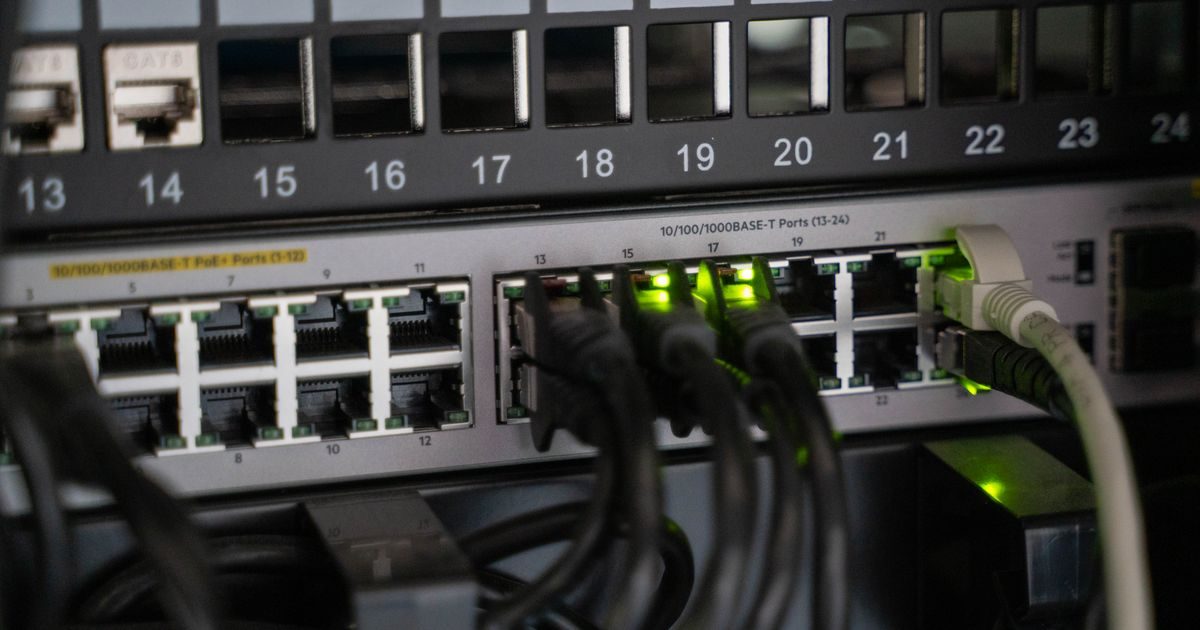
A cloud server spreads your workload across multiple physical nodes with built-in redundancy, while a VPS (Virtual Private Server) allocates fixed resources on a single physical host. That architectural difference drives the divergence in price, flexibility, and resilience between the two.
If you're evaluating infrastructure options in Mexico, this article breaks down the practical differences, the ideal use cases for each, and how to make the right call without overthinking it.
What Is a VPS and How Does It Work?
A VPS is a virtualized slice of a physical server. A hypervisor (KVM, VMware, or similar) partitions the host hardware — CPU, RAM, storage — among multiple tenants, each running in full isolation.
- Guaranteed resources: your plan states "4 vCPU, 8 GB RAM" and that's exactly what you get.
- Predictable pricing: flat monthly fee, no surprise bills.
- Full OS control: install and configure anything, just like a dedicated server.
The downside: if the underlying physical host fails, every VPS on it goes down. Uptime is tied to a single piece of hardware.
What Is a Cloud Server and How Does It Work?
A cloud server (or cloud instance) runs on an interconnected cluster of servers. Data is replicated across multiple nodes; if one fails, another takes over automatically with no manual intervention.
- High availability: no single point of failure; typical SLA of 99.9 %–99.99 %.
- Elastic scalability: scale CPU, RAM, and storage up or down in minutes — or automatically.
- Usage-based billing: many providers charge per hour or per second, ideal for variable loads.
The trade-off is that costs can become unpredictable if consumption isn't monitored, and the pricing model is more complex than a flat VPS fee.
Key Differences: Cloud vs VPS in Mexico
| Feature | VPS | Cloud Server |
|---|---|---|
| Infrastructure | Single physical server | Multi-node cluster |
| Availability | Depends on single hardware unit | Redundant high availability |
| Scalability | Limited; migration often required | Elastic, on-demand |
| Pricing | Fixed monthly (cheaper) | Variable by usage (can be higher) |
| OS control | Full | Full (IaaS) or limited (PaaS) |
| Best for | Stable projects, fixed budget | Variable traffic, mission-critical apps |
| Approx. price (Mexico) | MXN 150–800/month | MXN 200–2,000+/month by usage |
Which One Should You Choose in Mexico?
Go with a VPS if…
- You need a fixed, predictable monthly bill.
- Your site or application has relatively stable traffic.
- You're starting out and want server-level control without paying for enterprise-grade resilience.
- You want the most performance per Mexican peso: a well-configured VPS beats shared hosting at a fraction of cloud cost.
Go with a cloud server if…
- Your app requires high availability (high-volume e-commerce, SaaS, fintech).
- Traffic is seasonal or unpredictable (campaigns, product launches, lottery events).
- Downtime cost exceeds the premium you'd pay for cloud infrastructure.
- You want to scale horizontally by adding instances without manual migrations.
Latency and Data Centers in Mexico
For Mexican users, latency is a real factor. A server in Querétaro or Mexico City delivers lower response times than one in Miami or Dallas — regardless of whether it's a VPS or cloud instance.
When comparing providers, look for a data center presence in Mexico or at least in the south-central United States (Texas, Virginia). Platforms like AWS (us-east-1 / us-west-2) can add 40–80 ms of extra latency compared to a node in CDMX or Querétaro.
If you want guidance on which provider and region fits your project, the team at elenlace.com can advise you at no cost.
You can also browse more comparisons in our VPS servers section.
Key Takeaways
- A VPS gives you fixed resources, predictable pricing, and full OS control on a single physical host.
- A cloud server spreads resources across multiple nodes for high availability and elastic scaling.
- VPS is the more cost-effective choice for most websites and applications with stable traffic.
- Cloud makes sense when availability is critical or traffic is unpredictable — though costs can be higher.
- Latency matters: prioritize providers with data centers in Mexico or the south-central US.
Ready to pick the right server? Visit elenlace.com and get a personalized recommendation based on your traffic, budget, and technical requirements.
FAQ
Is a cloud server always more expensive than a VPS?
Not always. For stable, predictable workloads, a VPS is typically cheaper. But for variable or high-burst traffic, the pay-per-use cloud model can be competitive. Always estimate monthly cost using the provider's pricing calculator before deciding.
Can I migrate from a VPS to a cloud server without losing data?
Yes, though the process varies by provider. The most common approach is creating a disk snapshot of your VPS and restoring it on the cloud instance. Some providers offer assisted migration tools that simplify the process.
Do cloud servers have better performance than VPS?
Not necessarily. A VPS with dedicated resources can outperform a similarly spec'd cloud instance if the cloud cluster is under heavy load. Performance depends more on the actual specs and provider load than on the architecture model.
Are there cloud server providers with data centers in Mexico?
Yes. Providers such as Telmex/Totalplay, Axtel, Neubox, and global players like AWS and Google Cloud have regions or points of presence close to Mexico. Always verify the region when signing up to ensure low latency for your Mexican users.
Compare providers
Other providers and guides worth comparing: