Client-server architecture is a communication model in which one device (the client) requests resources or services, and another device (the server) provides them. It is the foundation on which virtually all of the modern web runs.
Every time you open a browser and visit a website, you experience this architecture in action — even if you never notice it.
What Is Client-Server Architecture?
The client-server model splits communication roles into two clearly defined parts:
- The client: any device or program that initiates a request. Your browser, a mobile app, or an email program are all clients.
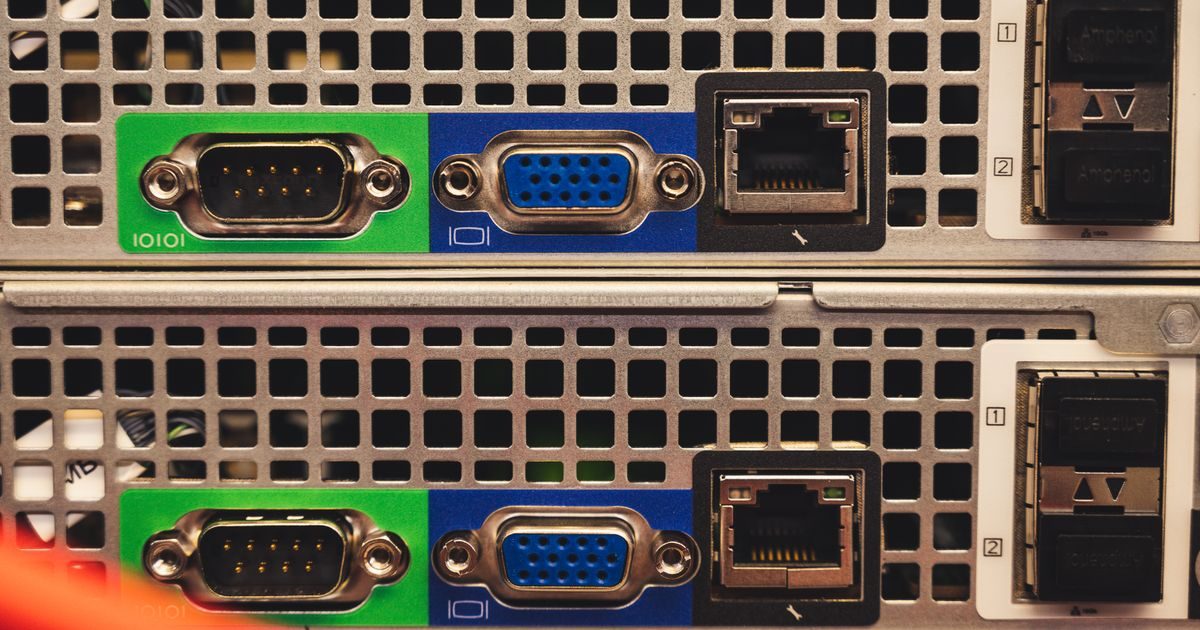
- The server: the machine that listens for requests, processes them, and returns a response. It can be a web server, database server, mail server, or file server.
This separation allows thousands of different clients to access the same resources simultaneously, without the server needing to know each one in advance.
Explore more about different server types in our servers and VPS section.
How Does It Work, Step by Step?
The basic flow of a client-server interaction always follows the same logic:
- Request: the client sends a request to the server. On the web, this is typically an HTTP or HTTPS request with a URL.
- Processing: the server receives the request, interprets it, and executes the necessary logic (querying a database, reading a file, etc.).
- Response: the server returns the result to the client — an HTML page, a JSON payload, a file, or an error code.
- Rendering: the client (the browser, for example) interprets the response and presents it to the user.
This cycle happens in milliseconds every time you load a page, send a message, or check your bank balance.
Protocols That Make Communication Possible
For the client and server to understand each other, they need to speak the same "language." These are the most common protocols:
| Protocol | Primary use | Default port |
|---|---|---|
| HTTP / HTTPS | Web browsing | 80 / 443 |
| SMTP / IMAP / POP3 | 25, 587 / 993 / 995 | |
| FTP / SFTP | File transfer | 21 / 22 |
| DNS | Domain name resolution | 53 |
| SSH | Secure remote access | 22 |
Each protocol defines the exact rules of the exchange: message format, connection management, and error handling.
Types of Client-Server Architecture
There is no single model; the architecture evolves to meet system requirements:
Two-Tier Architecture
The client communicates directly with the server. It is the simplest model, used in desktop applications or small intranets. The client carries part of the business logic.
Three-Tier Architecture
A middle layer called the application server is added. The client talks to the presentation layer, which talks to the business logic layer, which talks to the database. This is the most widely used model in modern web applications.
N-Tier (Multi-Layer) Architecture
The system is divided into multiple specialized layers: microservices, message queues, caches, and more. This is the standard for high-traffic platforms like e-commerce or digital banking.
Advantages and Limitations of the Client-Server Model
Advantages
- Centralization: data and logic live on the server, making updates and access control straightforward.
- Scalability: the server can be scaled without touching the clients.
- Security: sensitive data never leaves the server when the design is correct.
- Maintenance: fixing a bug on the server fixes it for all clients immediately.
Limitations
- Single point of failure: if the server goes down, all clients lose service.
- Congestion: many simultaneous requests can overwhelm the server.
- Network latency: the physical distance between client and server affects response speed.
That is why critical applications combine load balancers, CDNs, and server replication. If you are evaluating what infrastructure your project needs, the team at elenlace.com can advise you at no cost.
Key Takeaways
- Client-server architecture divides communication into two roles: the client requests and the server responds.
- Every web interaction follows the cycle: request → processing → response → rendering.
- Protocols (HTTP, SMTP, FTP, DNS) define the communication rules between both parties.
- Variants exist: two-tier, three-tier, and N-tier, depending on system complexity.
- Its main advantages are centralization and scalability; its Achilles' heel is the single point of failure.
Ready to move your project to professional infrastructure? Visit elenlace.com and find out how we can help you choose and configure the right server for your needs.
FAQ
What is the difference between client-server architecture and P2P?
In a P2P (peer-to-peer) model there is no centralized server: each node acts as both client and server. It is useful for decentralized file sharing but harder to control and secure than the client-server model.
Does a VPS use client-server architecture?
Yes. A VPS is a server that handles requests from web clients (browsers, apps, etc.). Client-server architecture describes the relationship between who requests and who serves; the VPS is the physical or virtual infrastructure where the server lives.
Why is HTTP the most important web protocol?
HTTP (and its secure version, HTTPS) defines how browsers request pages and how web servers deliver them. It is the universal language of the web — without it, web browsing as we know it would not exist.
Can the same machine be both a client and a server?
Yes. A web server acts as a client whenever it calls an external API, a database, or a microservice. The roles of client and server are functional, not physical: they depend on who initiates the request in each exchange.
Further reading
Other providers and guides worth comparing: